
Commercial roof restoration A roof worth restoring.
Restore serviceable roofing with an Australian-made coating system. Keep sound roof sheets in place, address necessary repairs and renew the protective finish—without the cost of replacing the entire roof.
A roof assessment determines whether restoration is suitable and what work is required.
- Commercial systemCommercial Roof Protect Primer (CRP) with 15-Year Roof Protect Membrane.
- 400 µmSpecified dry-film build.
- 15-yearManufacturer’s product warranty.1
- Made in AustraliaBy Industrial Roof Coatings.
Why restore
Restore your roof.
Reduce replacement costs.
Restoration can be a cost-effective alternative to replacing a commercial roof. Keeping serviceable sheets in place can reduce spending on new roofing, removal and disposal, leaving more of the budget for necessary repairs and renewed protection.
Full replacementEvery sheet removed, disposed of and replaced10 removed 0 retained
RestorationUnsound sheets replaced. The rest retained, repaired and coated3 removed 7 retained
Compare restoration and replacement using the roof assessment and a detailed scope of works.
-
Keep sound roofing
Retain sheets that remain serviceable and replace those that cannot be restored.
-
Focus spending where it is needed
Direct the budget towards preparation, targeted repairs and the specified coating system.
-
Plan around your operations
Agree access, work areas and scheduling with your applicator to help manage disruption to the building’s occupants and activities.
When is replacement the better option?
Sheets that are perforated, structurally unsound or too deteriorated to prepare and coat need repair or replacement. If that applies to much of the roof, replacing it may be the more practical choice. The condition assessment and the applicator’s quote are the basis for that decision.
Act before deterioration spreads
Treat rust before it costs you the roof.
Rust can develop when moisture and oxygen reach exposed steel. As corrosion progresses, it consumes metal and can weaken the roof sheets.
Acting early may allow affected sheets to be prepared, treated and recoated while they remain sound, helping avoid more extensive replacement later.
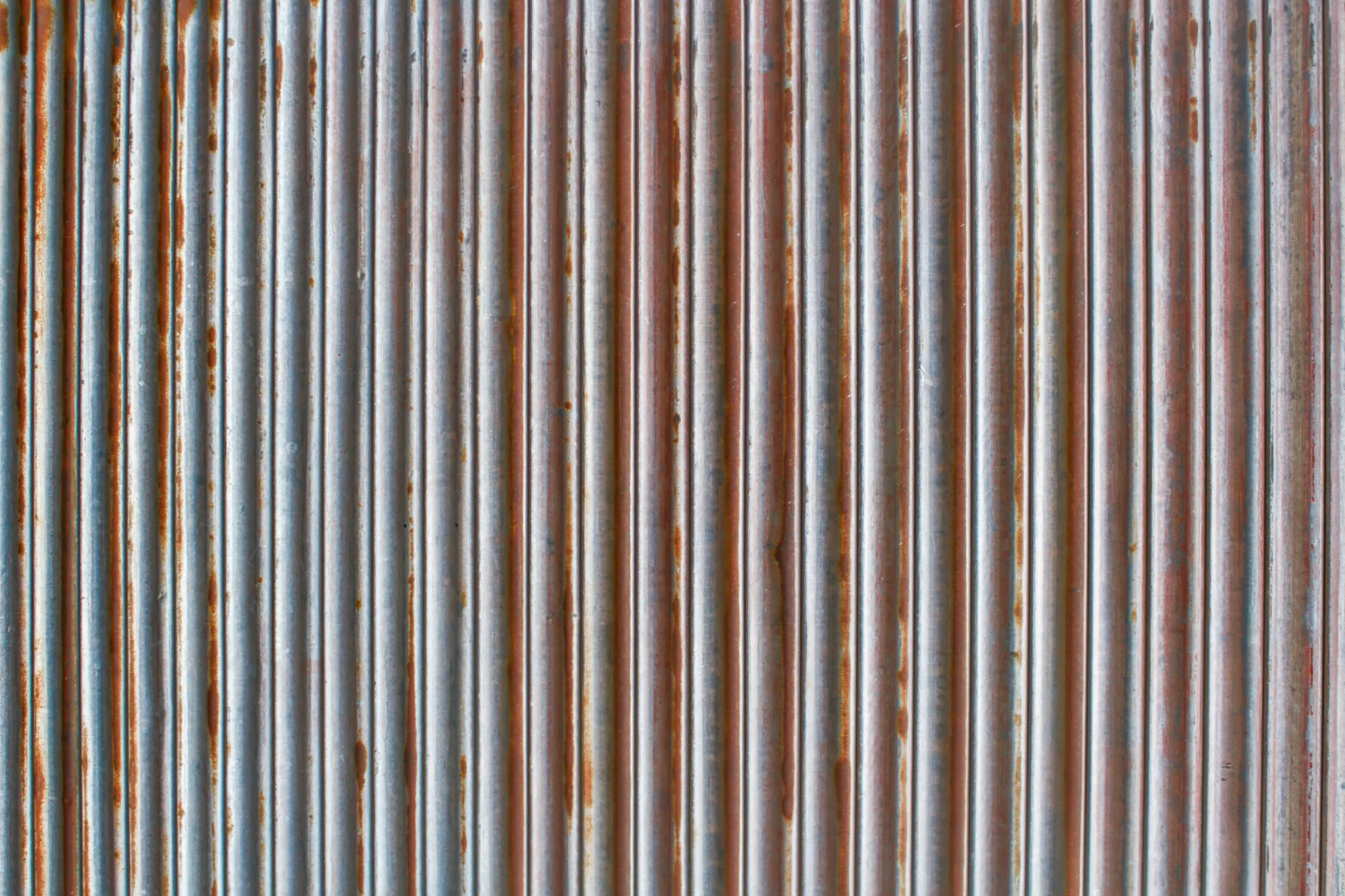
What the diagram shows
Where the protective coating is damaged, moisture and oxygen can reach the steel. Iron dissolves at the anodic site, electrons travel through the metal and ions move through the moisture. Rust forms as these reactions continue.
Rust can be treated while the sheets remain sound.
Your applicator removes loose rust, prepares the surface and applies the specified primer and membrane to help protect it from further corrosion.
Paint cannot replace lost metal.
Perforated or structurally unsound sheets need repair or replacement. Widespread deterioration can make full roof replacement necessary.
Illustration. Layer thicknesses not to scale; colours indicative.
- Membrane, coat 290 µm dry
- Membrane, coat 190 µm dry
- CRP Primer, coat 2110 µm dry
- CRP Primer, coat 1110 µm dry
- Prepared metal roof sheetrepaired and cleaned to the specification
The coating system
Protection, layer by layer.
The CRP system pairs Commercial Roof Protect Primer (CRP Primer) with 15-Year Roof Protect Membrane. Two coats of each build to a specified 400 µm dry film over the prepared metal.
400µmSpecified dry-film build of the CRP system
Four coats, one system.
220 µm of CRP Primer and 180 µm of membrane. The roof’s condition and coating history determine the final written specification.
CRP Primer: the foundation.
Two coats at 110 µm dry each, over suitable metal roofing once repairs and preparation are complete. Total primer build: 220 µm.
15-Year Roof Protect Membrane: the finish.
Two coats at 90 µm dry each form the exposed, coloured finish. Total membrane build: 180 µm. Heat-reflective colours are available as Thermal Heat Reflect HRC Roof Protect.
View coating specification
The specification at a glance
| Product | Coats | Wet film per coat | Dry film per coat | Spread rate per coat |
|---|---|---|---|---|
| CRP Primer | 2 | 200 µm | 110 µm | 5 m²/L |
| 15-Year Roof Protect Membrane | 2 | 167 µm | 90 µm | 6 m²/L |
| CRP system | 4 | 400 µm total |
Specified values for the CRP system. Spread rates assume a flat, non-porous surface with no application loss; roof profile and site conditions increase the quantity needed. The specification issued for your project governs.
Why wet film, solids and dry film matter
A coating goes on wet. As it dries, the volatile ingredients evaporate and the solids stay behind to form the protective film. So the wet thickness is specified higher than the dry film it leaves: each 200 µm wet coat of CRP Primer is specified to leave 110 µm dry, and each 167 µm wet coat of membrane leaves 90 µm.
Applicators check the wet film with a gauge as each coat goes on, so the build can be corrected while the coating is still wet. Applying too thinly leaves less protection than the system is designed for. The 400 µm figure is the specified build; readings taken on site go into the application record.
The products
The coatings behind the restoration
Commercial Roof Protect Primer and 15-Year Roof Protect Membrane form the coating system shown below. Each product has a defined role, from the prepared metal surface to the finished roof.
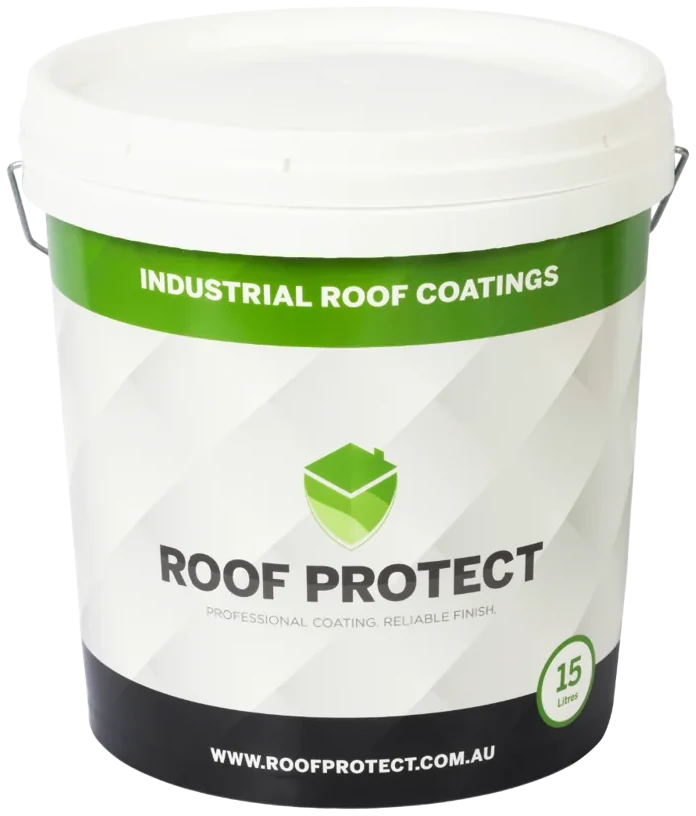
PrimerCRP Primer
Commercial Roof Protect Primer
The primer layer beneath the membrane, applied to a suitably prepared surface in accordance with the project specification.
- 2 coats
- 110 µm dry per coat
- 220 µm dry, both coats
Membrane15-Year Roof Protect Membrane
The protective finish over the primer, applied in two coats to the specified film thickness.
- 2 coats
- 90 µm dry per coat
- 180 µm dry, both coats
Heat-reflective optionThermal Heat Reflect HRC Roof Protect
Thermal Heat Reflect HRC Roof Protect offers a heat-reflective finish. Explore the colour and reflectance information below when considering the finish for your roof.
Thermal Heat Reflect HRC Roof Protect400 µmCombined dry film of the complete system: 220 µm of primer plus 180 µm of membrane, across four coats.
Made here. Backed by us.
Proudly Australian Made and Owned.
We manufacture our roof coatings in Australia, with product advice and technical information to help you choose the right system for your roof.

A previous restoration
See the difference restoration can make
Before-and-after photographs from a previous roof restoration using Commercial Roof Protect Primer (CRP).
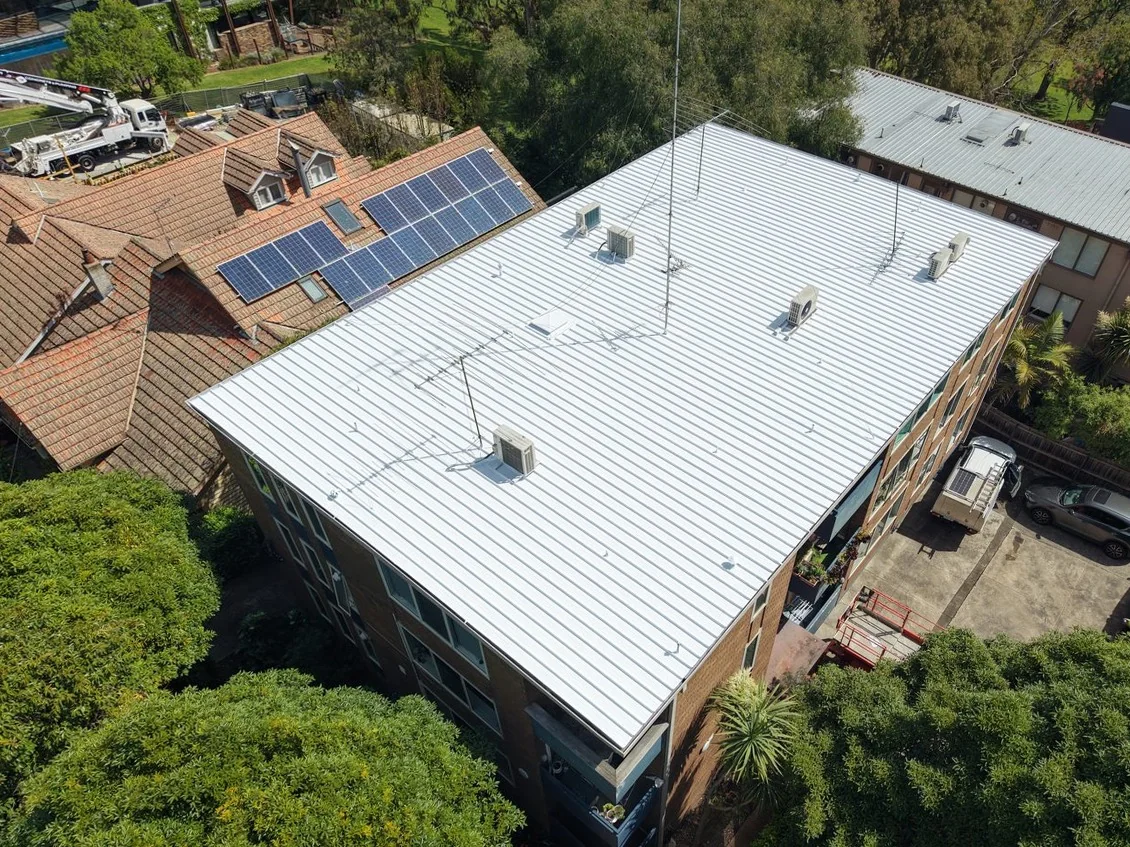
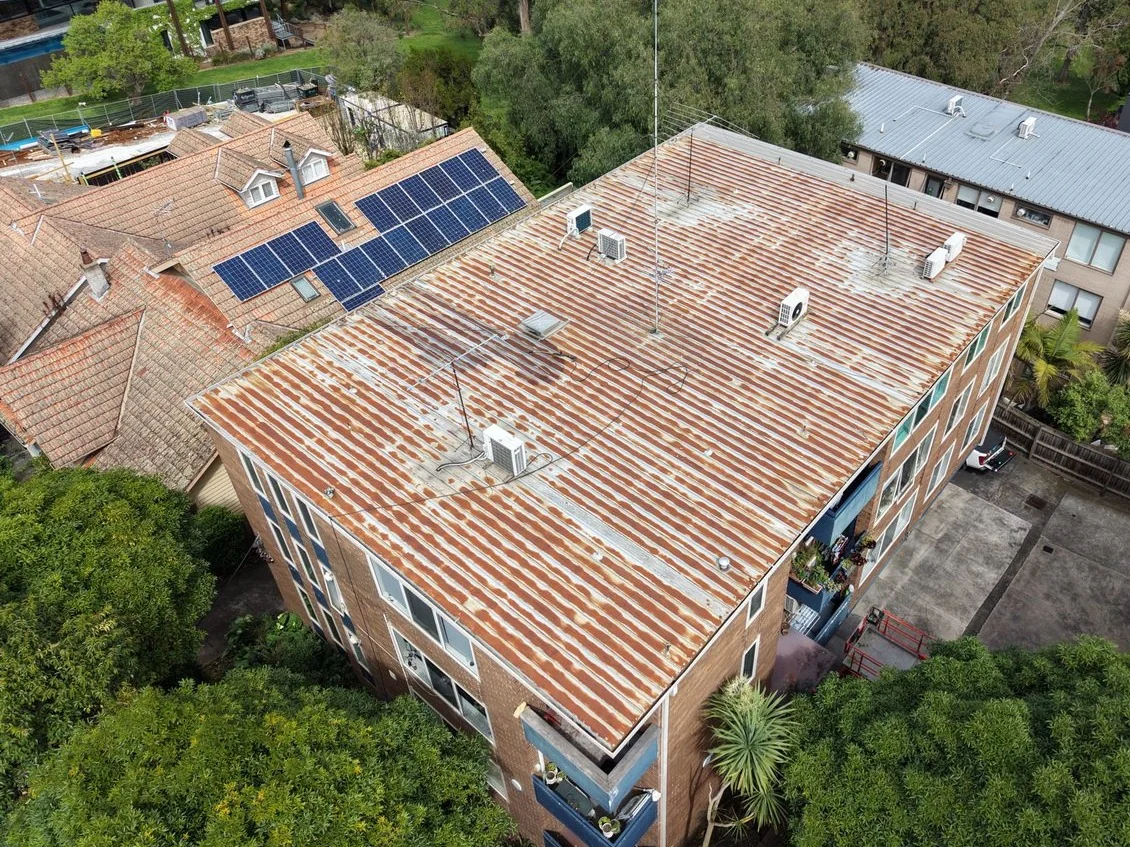
The photographs show the visible change only. Results depend on each roof’s condition and specification.
Solar reflectance
Turn more sunlight away.
Total solar reflectance (TSR) is the proportion of sunlight a surface reflects. Higher reflectance means less solar energy is absorbed by the roof.
Both colour and formulation affect reflectance. Our published colour comparisons show higher reflectance for HRC finishes than the standard version of the same colour.
Choose an HRC colour
IRC White HRC
>90%Total solar reflectance
<80 W/m²Absorbed, of 800 W/m² sunlight
Heat-reflective finish
Contact us for current reflectance data.
Reflected
The share of sunlight equal to the TSR is reflected away from the roof.
Absorbed
The rest is absorbed: sunlight × (1 − TSR). At 800 W/m², a 75% surface absorbs about 200 W/m²; a 43% surface about 456 W/m².
Inside the building
Insulation, ventilation, roof space, use, heat sources and cooling all play a part. Reflectance alone cannot predict indoor temperature or energy savings.
Illustrative calculation for an opaque roof surface at 800 W/m² of sunlight: absorbed solar power, not a building temperature or energy forecast.
Total solar reflectance by colour
| Colour | Standard | HRC |
|---|---|---|
| IRC White | Not listed | |
| Dover White | ||
| Surfmist | ||
| Paperbark | ||
| Dune |
Laboratory values from IRC’s published colour data, for comparison only. Performance on site varies with the environment, application and conditions. Screen colours are indicative: refer to physical samples. IRC colour range
Comfort inside the building
A cooler roof. A more comfortable space.
A heat-reflective finish sends more sunlight away, reducing the solar energy absorbed at the roof. This can help reduce heat entering the building and improve indoor comfort in hot weather.
In air-conditioned buildings, it may also reduce cooling demand.
The whole building plays a part.
The benefit depends on the climate, roof insulation, ventilation, internal heat sources and how the building is used. A reflective coating complements insulation and ventilation.
From assessment to handover
What happens during a roof restoration?
Your applicator assesses the roof, agrees the scope with you and records the work through to handover.
-
Assess the roof
Your applicator checks the roof’s condition, existing coating and areas needing attention to establish whether restoration is suitable.
- Roof sheets, side laps and fixings
- The existing coating or finish
- Corrosion and other areas needing repair
- Flashings and gutters
Safe access is planned for each site. Previously painted roofs cannot be covered by the manufacturer’s product warranty, so the coating history is confirmed first.
-
Confirm the scope and specification
Before work begins, receive a job-specific specification document setting out the scope of works agreed with your IRC Accredited Applicator, including repairs, preparation, the coating system and application requirements.
-
Prepare and apply
Complete the agreed preparation and repairs, then apply the coatings to the specified coverage and film thickness.
-
Handover and maintenance
Review the completed work and retain the application records, warranty documents and maintenance plan.
The manufacturer’s product warranty requires professional soft washing at least every four years, with records kept. Site conditions may require cleaning sooner. Care and maintenance guide
Working with IRC
Support for your roof restoration
Talk to us about the coating system for your roof. We can explain the product options and connect you with an IRC Accredited Applicator to assess the roof and prepare a quotation.

Product advice
Discuss the roof, existing finish and project requirements with us. Review the relevant product specifications and manufacturer’s warranty terms.
Assessment and application
Your independent IRC Accredited Applicator assesses the roof and provides a scope covering preparation, repairs, application and access.
Completion and maintenance
Agree the completion records and maintenance plan, including the inspection and cleaning requirements for the coating system.
Before you start
Roof restoration questions
A few practical answers to help you plan your roof restoration.
Talk to our teamCan a commercial metal roof be restored instead of replaced?
Often, if the roofing is still serviceable. Metal roof sheets that are sound can be repaired where needed, prepared and recoated. An inspection establishes the sheet condition, coating history and repairs before the system is specified. Unsound sheets need repair or replacement.
Is roof restoration cheaper than replacement?
Restoration can cost less where the existing roof remains serviceable. Retaining sound sheets can reduce new material, removal and disposal costs. The comparison depends on the roof’s condition, repairs, access and the scope of each quotation.
Who assesses the roof and provides the quotation?
An IRC Accredited Applicator can assess the roof and provide a quotation for the work. We can help with product information and finding an applicator.
How is the coating thickness checked?
The applicator measures the wet-film thickness with a gauge as each coat goes on and records the readings. The CRP system is specified to build 400 µm of dry film across four coats.
Can the building remain occupied during the work?
That depends on the building, the work required and site conditions. Discuss access, operating hours, overspray controls and any temporary restrictions with your applicator when agreeing the programme.
Will a reflective coating make the building cooler?
A more reflective surface absorbs less solar energy at the roof. The effect inside depends on insulation, ventilation, building use, internal heat sources and cooling. A reflectance figure alone cannot predict indoor temperature or energy savings.
What maintenance will the restored roof need?
Follow the care and maintenance requirements for the applied coating system, including the specified inspection and cleaning intervals. Retain maintenance records with the project and warranty documents. Care and maintenance guide
Next steps
Let’s talk about your roof.
Tell us about your building, the roof’s condition and what you would like to improve. We can discuss the coating options and help you find an IRC Accredited Applicator for an assessment and quote.
Send your enquiry
Share the property location and any known roof issues. If you have an approximate roof area, include it too.